 Get a Quote
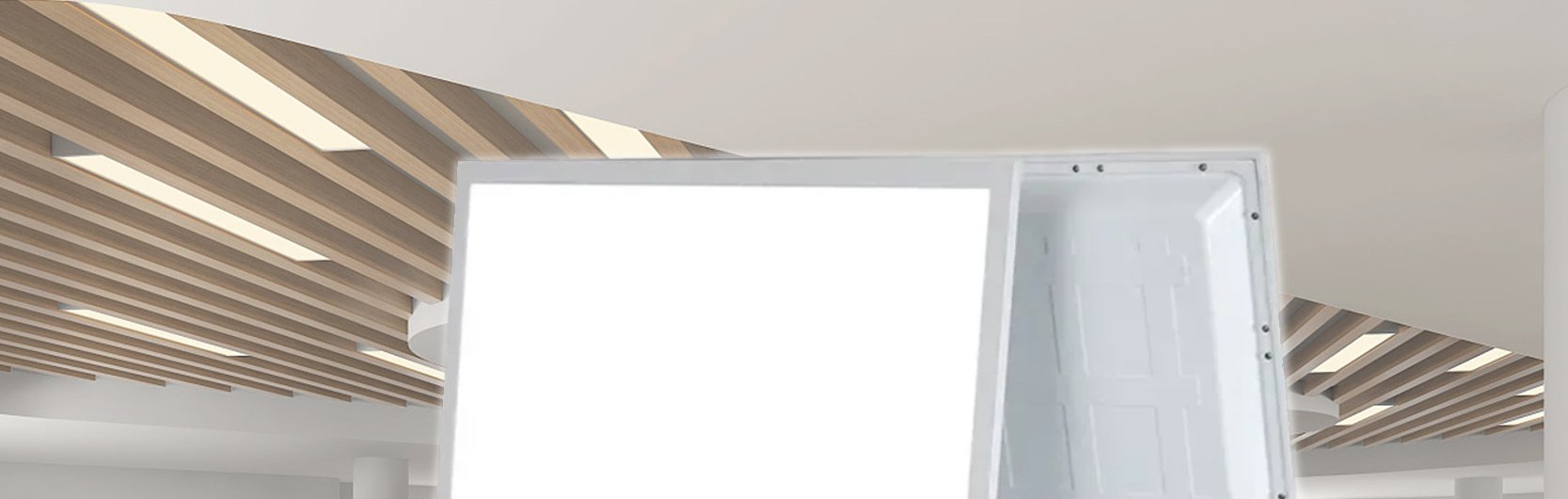
Both backlit and edge-lit panels deliver the same clean 600×600 ceiling look — and buyers regularly assume the cheaper one is the better deal. The two constructions differ in efficiency, panel depth, uniformity and long-term maintenance, and each wins in different project types. Here is the engineering view, plus the one office metric most datasheets bury: UGR.
| Factor | Edge-lit | Backlit |
|---|---|---|
| Lumens per watt (good builds) | 90–110 lm/W | 100–130 lm/W |
| Panel depth | 8–10 mm — slim premium look | 25–40 mm — needs ceiling void depth |
| Light uniformity | Very even, if the LGP is good | Even at proper LED-to-diffuser distance; cheap shallow builds show hotspots |
| Heat path | LEDs on frame — decent | LEDs on full metal backplate — best |
| Yellowing risk | LGP can yellow at edges with heat/UV age → visible dimming rim | No LGP — ages more gracefully |
| Typical price tier | Slightly higher BOM on quality builds | Lower BOM, better value at equal output |
| Best for | Premium offices, shallow ceiling voids, design-led retail | Offices, schools, healthcare, corridors — volume projects |
In offices where people face screens, the panel's glare rating matters more than its wattage. UGR (Unified Glare Rating) under 19 is the widely used threshold for screen-work areas. A panel can have excellent lm/W and still fail a UGR<19 office specification because of LED brightness, diffuser quality and the cell geometry of the micro-prismatic or opal optic. When quoting for office projects, ask the supplier for the UGR table from the photometric file — a single "UGR<19" marketing line is not enough for a lighting designer to sign off.
In like-for-like quality builds, yes — typically 10–20 lm/W, because no light is lost in the guide plate. Poorly designed backlit panels with too little diffuser distance lose the advantage through hotspots, so check the IES file, not the brochure.
With the right options: UGR<19 optic for screen areas, 4000 K as the default CCT, flicker-free driver, and an emergency 3-hour variant on the same chassis for corridors and escape routes.
Yes — IES/LDT files and Dialux calculation support per project, so your contractor or end customer can verify lux levels and UGR before ordering.
Frame size, UGR target, CCT and mounting method — send your project brief and we'll recommend the construction and options.