 Get a Quote
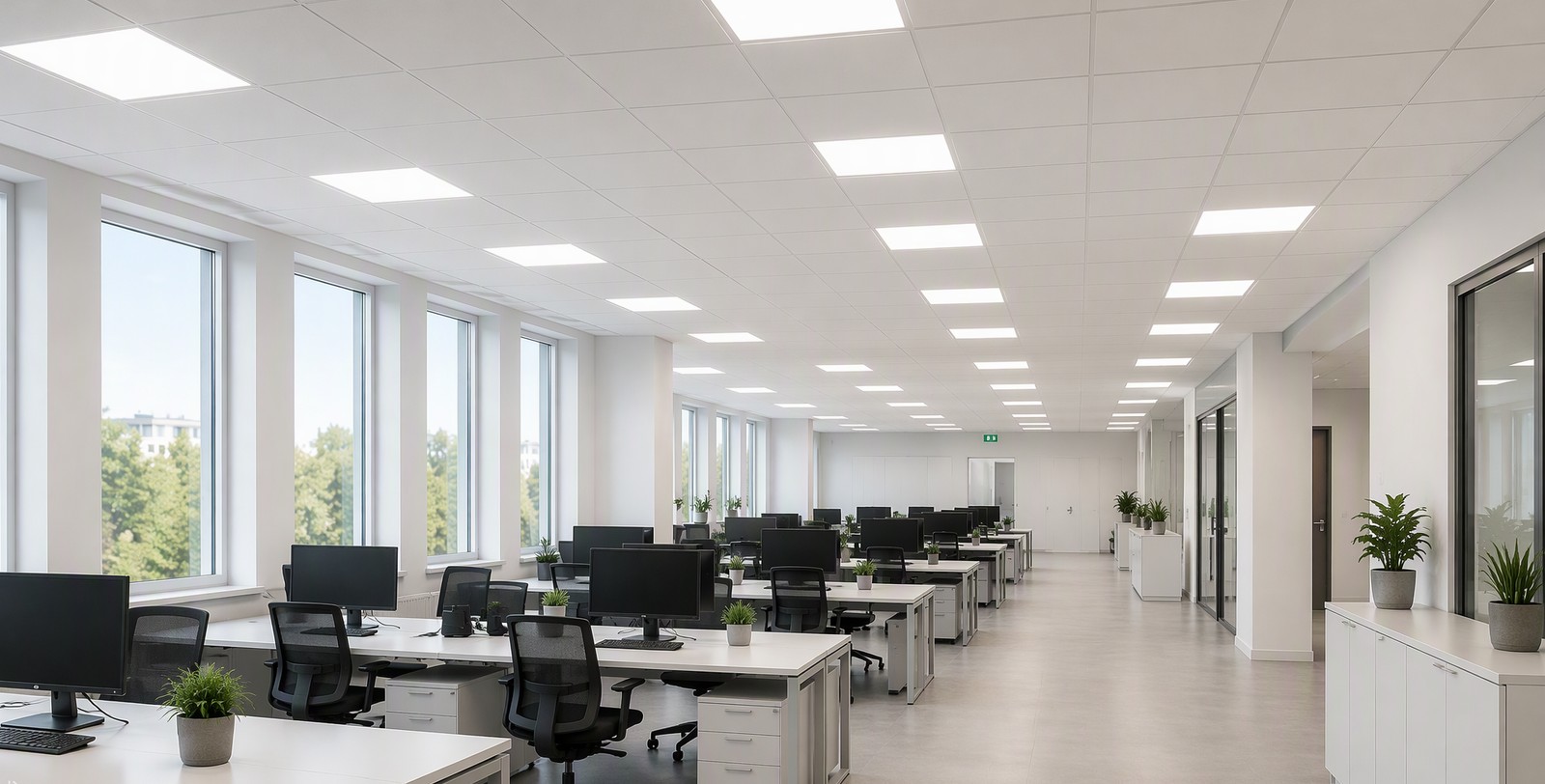
Two luminaires with identical wattage and price can feel completely different in the same building — because of color temperature (CCT) and color rendering (CRI). These are among the cheapest parameters to change at the factory and the most expensive to fix after a container arrives. Here is how to choose them zone by zone, and what to specify in an order.
Correlated color temperature is measured in kelvins. Lower is warmer and yellower, higher is cooler and bluer:
One caution on the high end: above ~6000 K can feel "bluish" and unflattering to products and skin tones, and very cool CCT at high illuminance has been discussed in workplace-comfort research. Most of our industrial customers settle on 4000 K or 5000 K for production zones and 4000 K for everything people occupy long-term.
Color rendering index (Ra) measures how faithfully a light source shows colors compared with a reference — max 100. Its impact is practical, not cosmetic:
A useful nuance: generic Ra can hide weaknesses in specific colors (especially deep red, R9). For QC and color-critical work, ask for the extended test data — R9 above 50–60 matters more than the last two Ra points.
| Zone | CCT | CRI | Notes |
|---|---|---|---|
| Warehouse / logistics | 4000–5000 K | ≥70 | Vertical lux on rack labels matters more than CRI |
| Production floor | 4000–5000 K | ≥80 | Match existing fluorescent feel to ease the transition |
| Inspection / QC | 5000 K | ≥90 | Check R9 for red-dominant work |
| Offices / control rooms | 4000 K | ≥80 | UGR < 19 targets apply here |
| Cold storage | 5000–6500 K | ≥80 | Cool CCT counteracts the "dim and dingy" feel |
| Parking / outdoor | 4000–5700 K | ≥70 | Check local dark-sky or municipality rules |
| Showroom / reception | 3000–4000 K | ≥80 | Warmth sells; harsh cool light flattens displays |
Not inherently, but cool light at high illuminance in spaces people occupy for hours can feel harsh and is often criticized in comfort surveys. For 24/7 plants, many operators standardize on 4000 K to keep day and night shifts visually consistent.
You can, deliberately — cooler on production lines, neutral in offices. What you must avoid is mixing them in the same sightline: adjacent zones with different CCT read as a mistake, not a design.
CCT-selectable panels and triproof fixtures let one SKU cover multiple zones. We can quote both fixed-CCT and switchable versions of the same housing so you keep range breadth without doubling inventory.
Send the facility layout — we'll recommend CCT, CRI and SDCM per zone with the quotation.