 Get a Quote
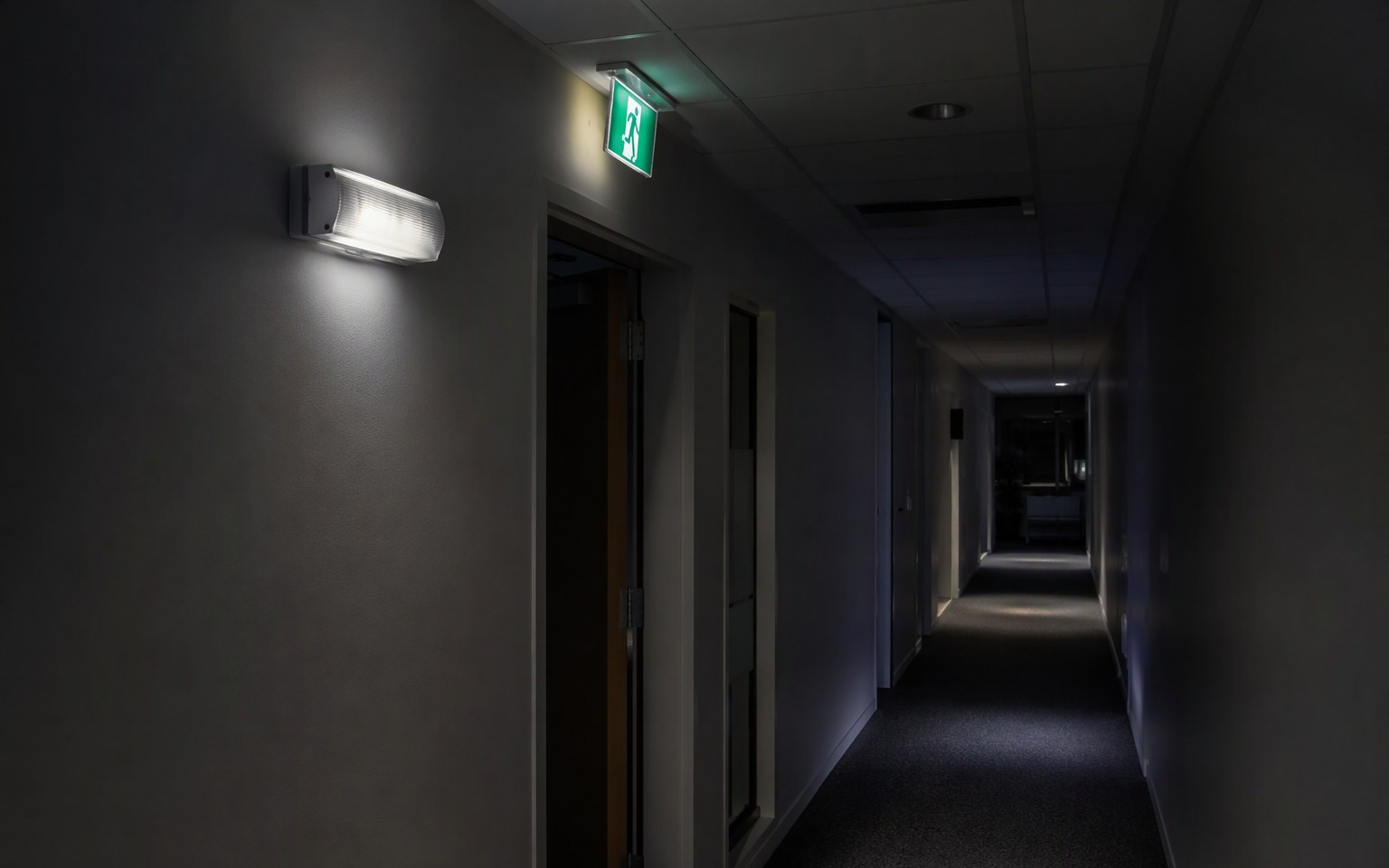
Emergency lighting is the one category where a paperwork mistake can void an entire shipment's usability: the fixture works, but the authority having jurisdiction rejects it. For EU-bound projects the framework is EN 1838 (the escape-lighting standard), the CPR framework requiring CE marking via EN 60598-2-22, and local building codes that almost universally converge on one number — 3 hours of battery autonomy. Here is what to check before you order.
| Spec on datasheet | What to verify |
|---|---|
| Rated duration (1h / 3h) | Ask for the battery discharge test report at rated lumen output, not just cell capacity in mAh |
| Output in emergency mode | Emergency lumen output is often ~10–30% of mains output — check it still meets the 1 lux route calc at your spacing |
| Battery chemistry | Ni-Cd and LiFePO4 dominate; LiFePO4 gives 4–5× cycle life for frequently-tested sites and high ambient temperatures |
| Self-test / auto-test | Function test monthly and rated-duration test periodically are code expectations; self-testing fittings save facility managers from manual checks |
| IP and impact rating | Escape hardware in industrial sites typically needs IP65 and IK08 minimum |
| Operating mode | Maintained (lamp always on, mandatory in some public spaces) vs non-maintained (only on failure) — confirm what the project spec demands |
Yes — some countries and occupancy types allow 1 hour, and residential blocks in several markets specify it. But if you stock one SKU for the EU, make it 3 hours; it satisfies the strictest common case and costs little more.
Many of ours are switchable via wiring, which lets you consolidate SKUs across project types. Verify the mode on the dataplate when commissioning.
Yes — duration discharge reports, photometrics and EMC/LVD documentation ship with each order, and ENEC certification is available on selected emergency ranges.
Tell us the destination market and project type — we will confirm the mode, duration, legends and certificates you need before you order.