 Get a Quote
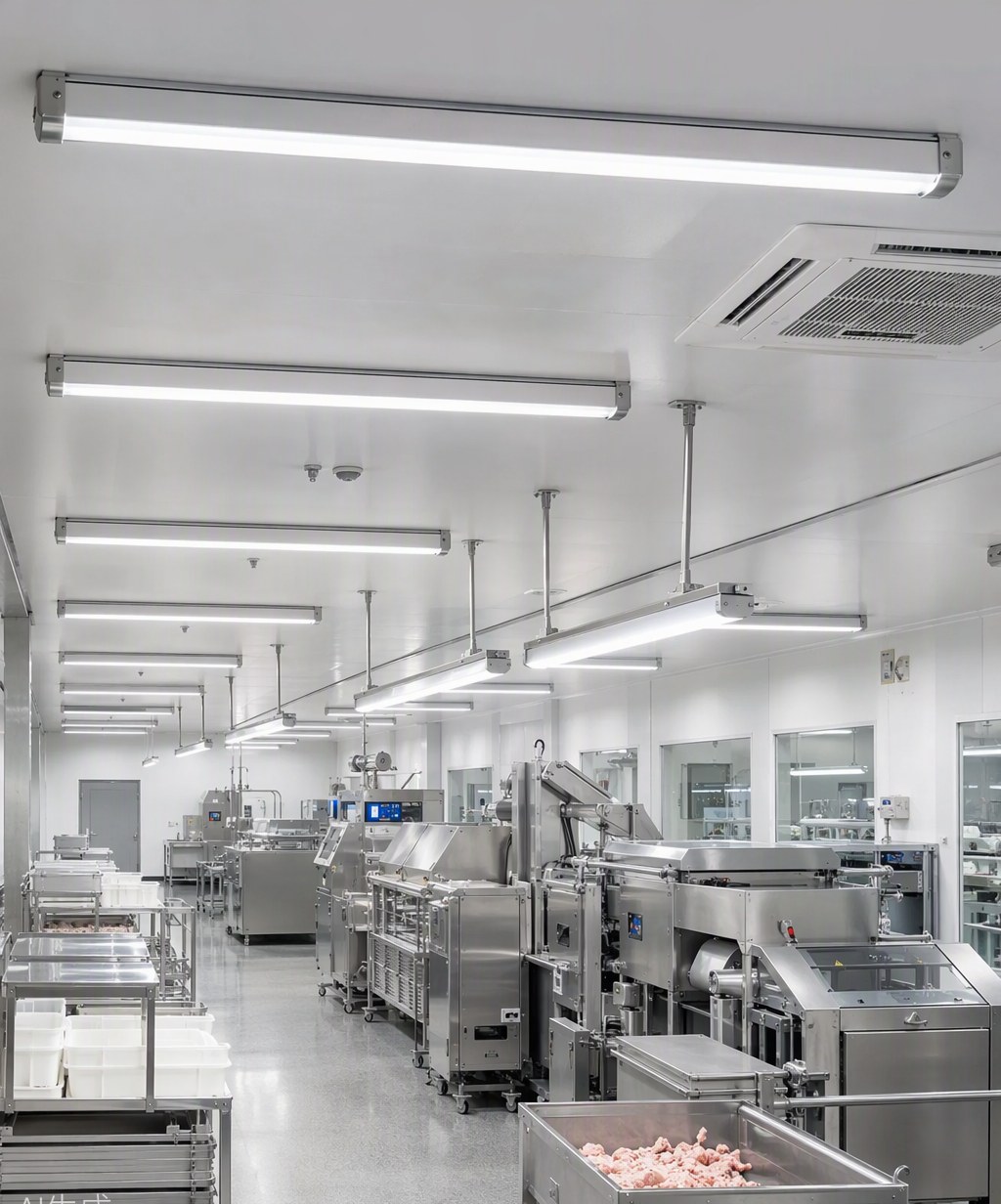
Everyone in industrial lighting has seen "IK10" printed on a datasheet. Fewer can say what it actually measures — and fewer still know whether their project needs it. IK is the impact-resistance counterpart to the IP water-and-dust code, and confusing the two leads to both over-specification (paying for IK10 in a low-risk warehouse) and under-specification (plastic clips in a loading dock).
IK is defined in IEC 62262. A luminaire is struck by a calibrated pendulum hammer at defined points — housing, diffuser, end caps — and the rating reflects the impact energy it survives without dangerous failure or loss of function. The scale runs from IK00 (no protection) to IK10 (20 joules), roughly the energy of a 5 kg mass dropped from 40 cm, or a serious swing from a tool or piece of equipment.
The two ratings buyers meet in practice:
IP rates ingress — water and dust. IK rates impact. A fixture can be IP69K (excellent washdown sealing) with modest IK, and a well-armored IK10 housing can leak in a jet wash if its gasket design is weak. For harsh environments you specify both, and you check they were tested independently — a datasheet line that says "IP65/IK10" should be backed by two separate test reports, not one combined claim.
IK10 typically costs more because it is built, not stickered: metal or reinforced housings, polycarbonate diffusers rather than thin PS, stainless steel clips instead of plastic latches, and thicker mounting hardware. The premium is worth paying where the fixture is within the reach of people, tools or machinery:
For ceiling-mounted fittings at 8–14 m in a rack warehouse, IK08 is usually adequate — nothing up there is getting hit. Spend the difference on efficacy or better drivers instead.
Three things to verify beyond the headline number: the test standard (IEC 62262, not an internal "impact test"), the test points (diffuser and end caps, not just the housing center), and the acceptance criteria (no dangerous failure is the standard's wording — ask whether function was retained, not just safety). Serious suppliers attach the actual IK report to the technical file; we do this per model on request.
Generally no — it is a risk-based engineering choice, not a legal floor. Some public tenders, insurance terms or workplace risk assessments (vandal-prone areas, food plants with overhead pipework) do mandate it. Confirm the project spec before deciding.
No, they are independent. However, fixtures designed for genuine IK10 usually have better overall mechanical design, so quality IK10 fittings are often well-sealed too — just verify the IP report separately.
Not meaningfully. Wire guards and protective cages help, but they change the photometrics and complicate cleaning. If the risk assessment says IK10, buy IK10.
Send the environment description — we'll recommend the rating and back it with test reports per model.