 Get a Quote
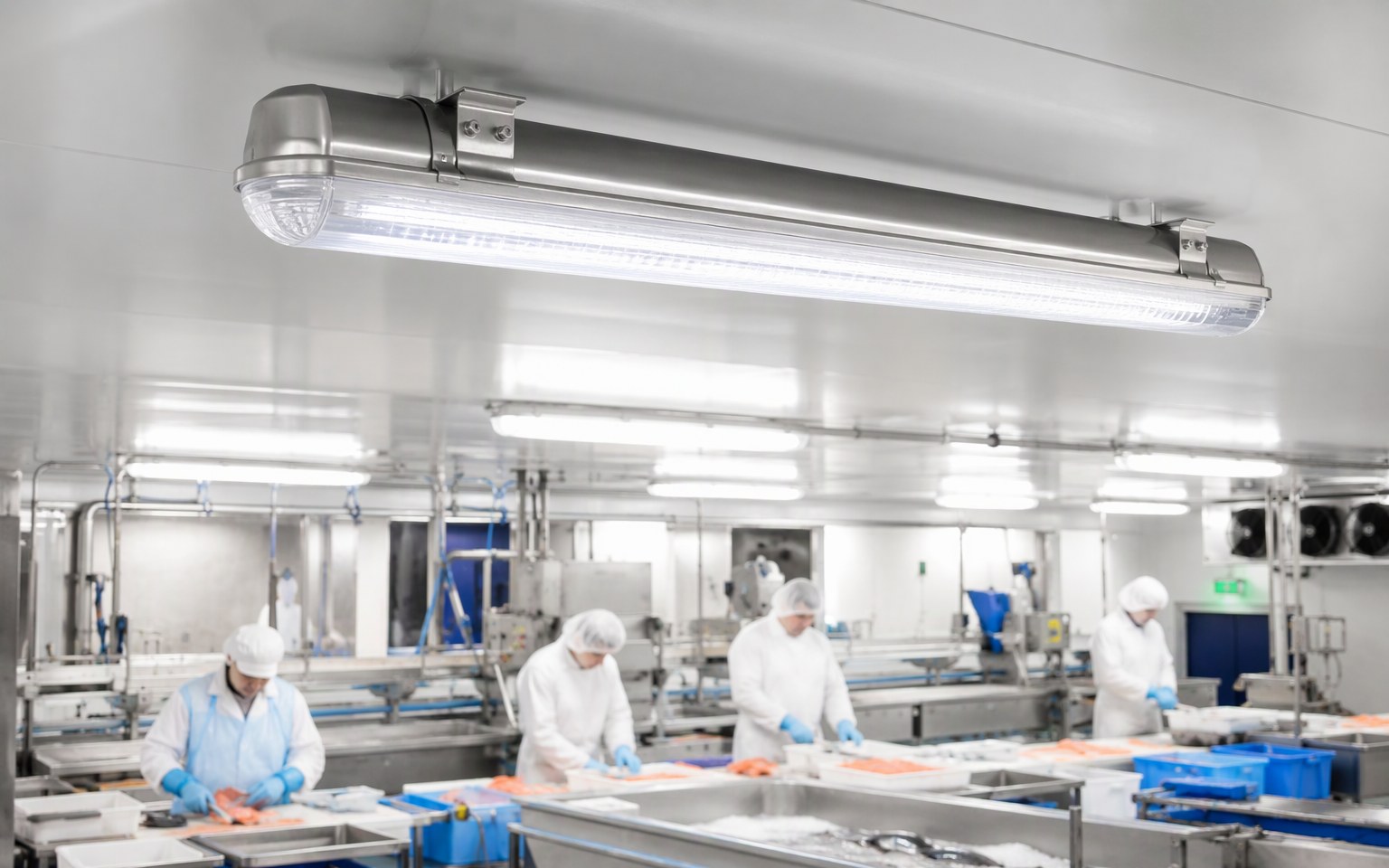
Two fittings can look identical on a datasheet — same lumen package, same diffuser, same price — and age ten years apart. The difference is usually the two digits after "stainless": 304 or 316. Choosing wrong does not fail in the first month; it fails in year two, as tea staining, pitting around screws, and rust streaks that your customer photographs and sends back. Here is how to match the grade to the job before you quote.
Both grades are austenitic stainless steels. 304 (18/8: 18% chromium, 8% nickel) resists oxidation and most industrial atmospheres well. 316 adds 2–3% molybdenum, which dramatically improves resistance to chlorides — the corrosion agent in seawater, coastal air, de-icing salt, and many cleaning chemicals. In corrosion-science terms, 316's higher PREN (pitting resistance equivalent, roughly 24–26 vs 19–20 for 304) is what buys the extra years in marine air.
The practical rule: the closer the installation is to salt, the more the molybdenum earns its cost premium.
| Environment | Recommended grade | Why |
|---|---|---|
| Inland factories, warehouses, car parks | 304 | No chloride source; 304 survives decades with normal cleaning |
| Coastal sites within ~5 km of the sea | 316 / 316L | Airborne salt deposits pit 304 within 1–3 years; 316 holds 10+ years |
| Food, beverage, pharmaceutical plants | 316L | Washdown chemicals (chlorinated cleaners, acids) plus hygiene audits favor low-carbon 316L welds |
| Swimming pools and spa halls | Neither — use special alloys | Chlorine gas attacks even 316; specify products designed for pool atmospheres |
| Chemical and fertilizer plants | Case-by-case | Ask for the chemical exposure list; sometimes epoxy-coated aluminum wins on cost |
One more coastal detail buyers miss: the mounting hardware must match the housing. A 316 body with 304 screws still rusts — at the screws first. We supply grade-matched fasteners as standard on marine-specification orders.
Inland, no — 304 delivers the same service life and the premium is wasted margin. Within a few kilometers of the coast, or in washdown food plants, yes: the premium is cheaper than one warranty callback on a corroded housing.
Fresh-water rinsing slows tea staining but cannot stop chloride pitting in crevices and around fasteners. For permanent coastal installs, specify 316 and treat cleaning as a bonus, not the defense.
Three layers: the EN 10204 3.1 mill certificate matching the batch, a PMI spot-check with a handheld XRF gun on the housing and screws, and a salt spray report from an accredited lab. We supply all three on request.
316L has lower carbon (max 0.03% vs 0.08%), which prevents carbide precipitation at welds — the rust spots that appear along weld seams. For welded lighting housings, 316L is the correct choice.
Send the site conditions — distance to sea, cleaning regime, chemicals — and we will propose the right grade, fasteners and test evidence.