Buying Guide
T5 vs T8 LED Tubes and Integrated Battens: The Replacement Guide for Importers
Nov 2, 2026Longlux Engineering6 min read
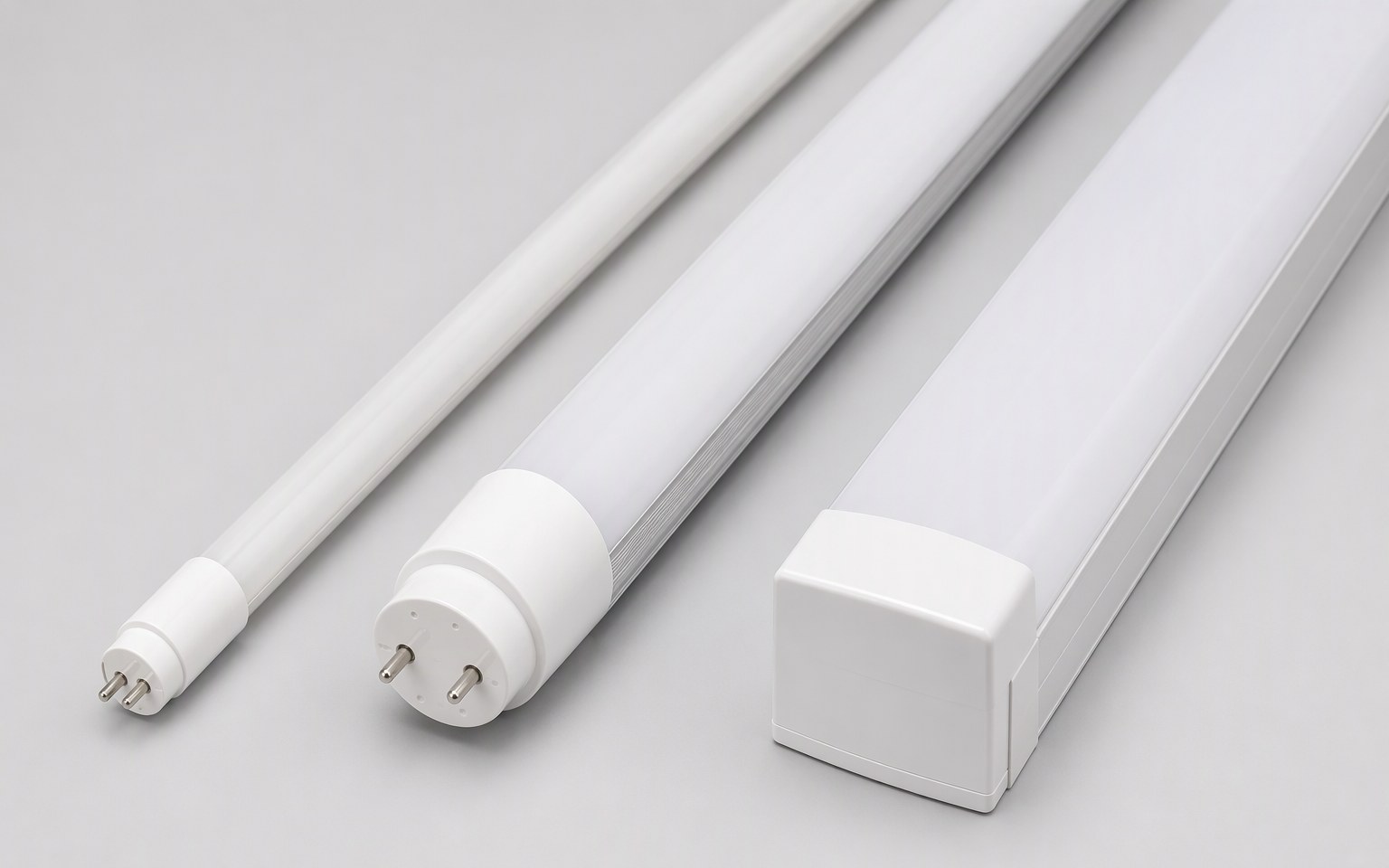
The fluorescent phase-out across the EU and other markets has turned LED tubes from a niche into a retrofit volume business. But the category hides three decisions that determine whether your shipment sells or sits: tube diameter format, retrofit wiring type, and whether to push tubes at all — or integrated battens instead. Here is how the market actually splits.
T5, T8, and the death of T12
- T8 (26 mm) is the volume king — the standard 600/1200/1500 mm fluorescent format found in every warehouse, garage and office ceiling void worldwide. LED T8 replacements dominate retrofit demand.
- T5 (16 mm) serves slimmer fixtures and higher-output compact designs; integrated T5 battens (with built-in driver) are the modern replacement for T5 fluorescents, since the T5's miniature G5 base is less forgiving in retrofit sockets.
- T12 is effectively legacy; LED retrofits exist but new projects have moved on. Do not build inventory here.
The retrofit wiring question that kills returns
LED tubes come in three electrical flavors, and mixing them up is the number-one cause of distributor returns:
- Ballast-compatible ("plug-and-play"). Works with the existing fluorescent ballast. Easiest install, but you inherit the ballast's power loss and failure point — and EU ErP rules increasingly frown on keeping magnetic ballasts in service.
- Direct-wire (ballast bypass). The ballast is removed and line voltage goes straight to the tube's end caps. Best efficiency and reliability; requires a competent installer and clear wiring diagrams. Our tubes ship with installation sheets per wiring type.
- Universal (works both ways). Maximum installer flexibility, slight price premium — often the safest SKU for mixed contractor skill levels.
Integrated battens: the better answer for new projects
For new installs and full refurbishments, integrated LED battens beat tubes-and-frames on cost, efficiency (no socket losses, better thermal path) and IP rating (many reach IP65 as a complete fitting). Key formats to stock:
| Format | Typical market | Notes |
|---|
| T8 LED tube 600/1200/1500 mm | Global retrofit | Stock glass and aluminum-PC bodies; 4000 K neutral white is the default |
| T5 integrated batten (1.2 m) | EU, Middle East | Slim profile, linkable versions for continuous runs |
| IP65 vapor-proof battens | Parking, agriculture, food | Where the tube stops and the triproof fixture begins; see our triproof ranges |
| Sensor / emergency variants | Energy-retrofit tenders | Microwave sensor and 3 h emergency versions win utility and public-sector bids |
Specs that separate professional tubes from commodity
- Real lumen output, not "equivalent watts." Compare lm/W (good tubes exceed 130 lm/W on the driver) and total lumens against the fluorescent being replaced.
- Flicker and Pst LM. Low-quality drivers flicker visibly and fail camera-based workplaces; ask for flicker percentage or Pst LM <1 data.
- Glass vs aluminum-PC body. Glass diffuses better and is cheaper; aluminum-PC survives impacts and dissipates heat. Match to application.
- Color consistency. SDCM ≤3 keeps a retrofit ceiling from looking like a patchwork; batch-binning matters on multi-floor projects.
Frequently asked
Can I mix brands of tube and batten?
Mechanically yes, electrically only within the same wiring type. The safest path for project business is one supplier for both tubes and battens — then wiring diagrams, certifications and warranty sit with one party.
Which color temperature sells best?
4000 K is the industrial and commercial default worldwide; 3000 K serves hospitality retrofits; 6500 K persists in some Middle East and Asian markets. CCT-switchable SKUs let one SKU cover all three.
Do you support private-label tube programs?
Yes — laser marking, custom cartons and datasheet branding are standard services for distributor programs.
Related Products
Tube & Batten Range
 Get a Quote